17th September 2026
The DQ: Putting a number on the thing you claim to be good at
Last week we asked you to count the people whose careers you have materially moved forward in the last three years. Not the team you have led. The individuals you have backed.
Most leaders find that harder than expected, not because they’re bad at developing people, but because nobody’s ever asked them to count. They can recite three years of P&L, headcount and key wins from memory. This number, nobody keeps.
So, here’s a way to:
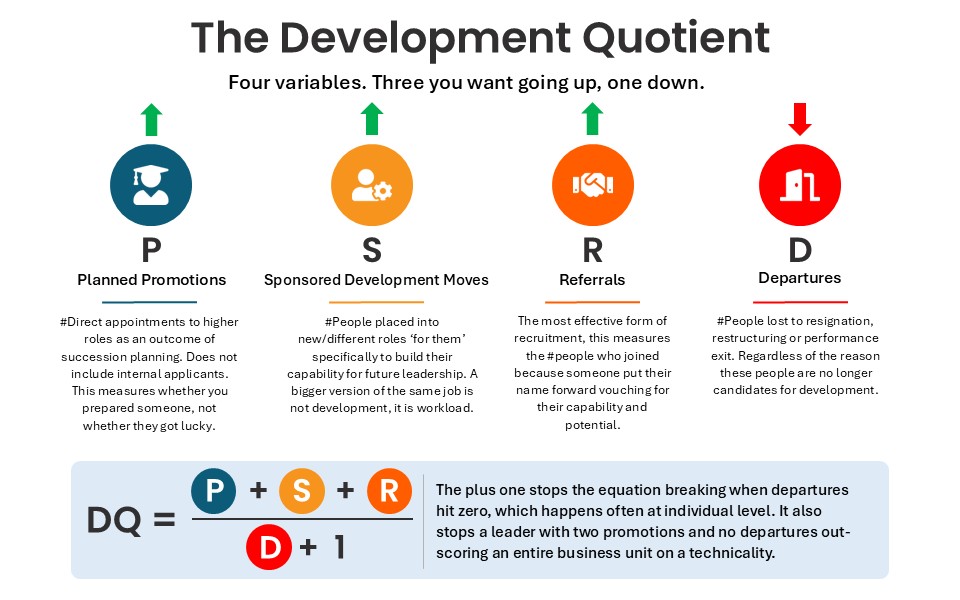
Referrals Do Two Jobs
At individual level, a referral is something you do. It’s the person you called personally and persuaded to join, sponsorship pointed in the other direction. At organisational level, it measures whether people will put their name behind this place to someone they respect. Staff don’t recommend an employer they’re quietly planning to leave, which is exactly why referral flow is worth watching – it costs the person something to give.
Same number, two meanings. One caveat – a leader importing their whole old team isn’t building a pipeline, they’re relocating one, usually over the top of people who were next in line.
What It Tells You
A high DQ means you grow people faster than you lose them. A low one means the external market is quietly covering your shortfall, at a premium. And a very low departure number isn’t automatically good news – a team nobody leaves can be a team nobody can leave.
The value isn’t in the score. It’s in the questions it forces:
- Is succession planning producing anything, or just documents?
- Which managers have a strong DQ, and which have a terrible one nobody’s ever raised with them?
- Are you filling roles internally because you developed people, or externally because you didn’t?
- Is the DQ the same for women as for men? Now you have evidence, not an argument.
The Objection
“What about the good departures? If I develop someone well and a competitor hires them, I get punished for doing my job properly.”
We understand the objection. We don’t fully accept it. The capability’s still gone, and the honest question isn’t whether the measure is unfair, it’s why their next step existed somewhere else and not here.
Where to Start
Pull the last twelve months. Count the four numbers. Don’t adjust, contextualise or explain them yet. That’s your baseline, not a verdict and not a KPI to be gamed. Then run it on yourself, just you, last three years, four numbers.
Someone once put your name forward in a room you weren’t in. They didn’t need a framework to do it. The DQ won’t make that decision for you. It’ll just stop you pretending you already have.
If you want to establish a DQ baseline across your leadership group, and have the conversation that follows it, get in touch.

Generator Talent Group
Categories: Uncategorised